AB Restoration Weehawken
📞 201-510-5446
Weehawken • NJ

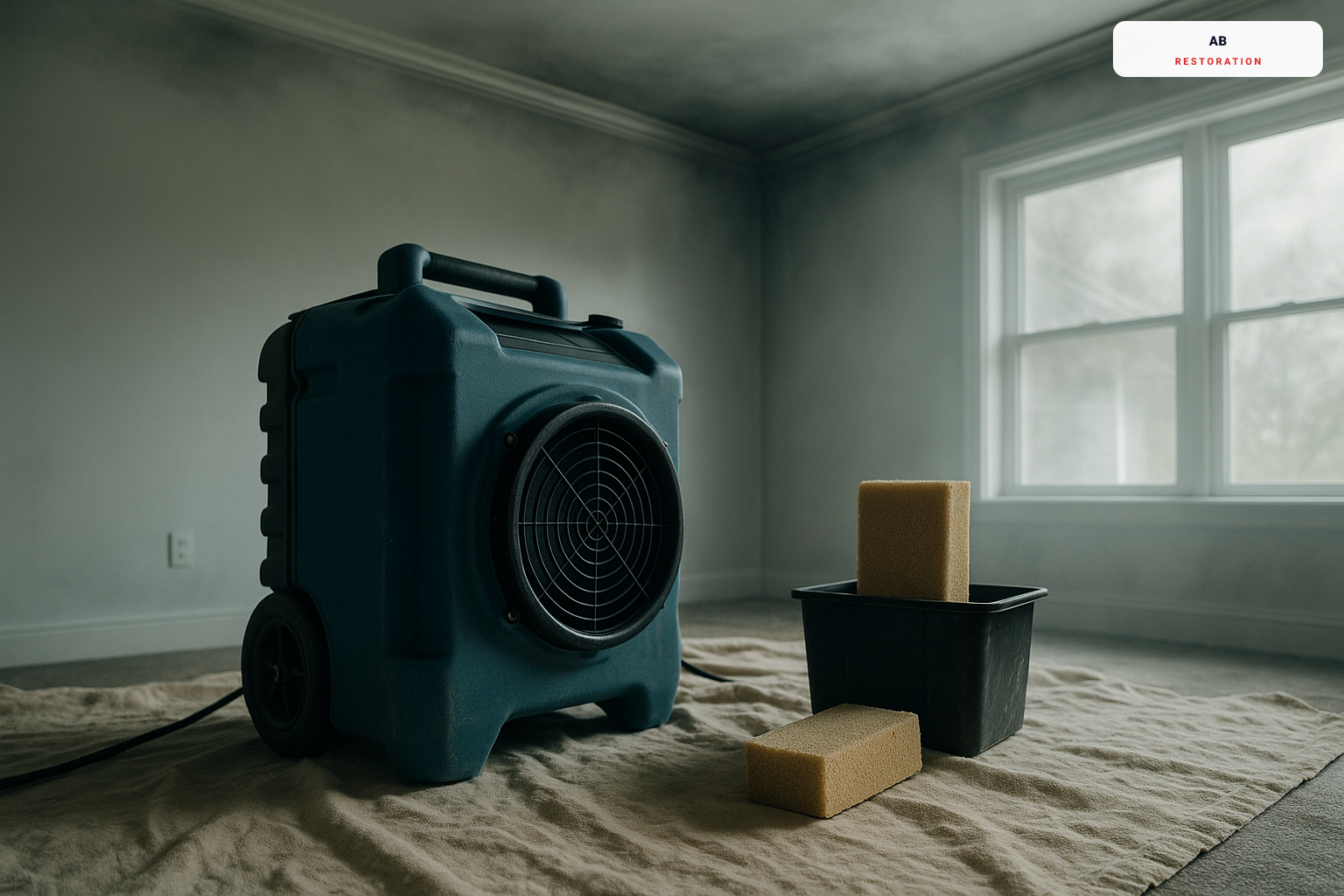
Mold Remediation in Weehawken.

Containment, removal, and prevention of mold growth after water events or chronic moisture problems.

Local team in Weehawken Honest, transparent pricing 24/7 emergency line
Owner-Led Direct access during your project
Honest Cause-of-loss documented accurately
Transparent Line-item Xactimate pricing
Service Overview

How We Approach It

Visible mold growth on a wall or ceiling is rarely the whole problem — fungal growth typically extends into wall cavities, behind baseboards, and inside HVAC ducts that were exposed to the same moisture. Our scope covers what is visible PLUS what is hidden.

What's Included

  • IICRC S520 protocol
  • Negative-air containment
  • HEPA filtration
  • Source removal to documented line
  • Antimicrobial application
  • Optional 3rd-party clearance testing

Why Bleach Does Not Kill Mold (And What Actually Does)

The single most common mold-remediation myth: bleach kills mold. It does not. Bleach is mostly water plus sodium hypochlorite. It can lighten surface staining (which is why people think it worked) but the chlorine evaporates while the water soaks into porous material, feeding the fungal growth underneath. Within weeks the visible mold returns.

What actually works: physical removal of the contaminated substrate. If mold is on porous material (drywall, insulation, untreated wood, carpet pad), remove the material. If mold is on hard non-porous surfaces (sealed concrete, finished wood, ceramic tile), HEPA vacuum + wipe with EPA-registered antimicrobial. Either way, the source moisture has to be eliminated first or the mold returns regardless of what cleaning was done.

Antimicrobial chemicals have a place in our protocol — applied AFTER source removal, on remaining hard surfaces, as a final step before reconstruction. They do not substitute for source removal. A {{city}} restorer who promises to "spray and seal" without removing contaminated substrate is selling a treatment that fails predictably.

Iicrc S520 Protocol — What Proper Mold Remediation Looks Like

The IICRC S520 standard defines the protocol for safe, effective mold remediation. It is not legally required in {{state}} but it is what good restorers follow because it is the only approach that actually works long-term. The shortcut versions (spray bleach on it, paint over it, fog with antimicrobial, leave the source moisture in place) all fail within months.

The protocol has five phases: assessment (where is the mold, how extensive, what species, source moisture identified and stopped), containment (negative-air pressure differential between affected and unaffected spaces, plastic sheeting, HEPA-filtered air scrubbers running continuously), source removal (porous materials with growth get removed and bagged for disposal — drywall to documented flood line, insulation, untreated wood), HEPA cleaning (all hard surfaces in the containment), and verification (visual inspection + optional third-party air sampling to confirm the contamination has been removed).

Reconstruction only starts AFTER verification clears. New material does not go up against contaminated substrate. Skipping verification is how you end up with mold returning behind a freshly-painted wall.

Process

Our Process

  1. 01

    Free On-site Assessment

    No-cost emergency response and scope evaluation. We get there fast, document what we find, and give an honest read on the loss in plain language.

  2. 02

    Open the Claim Together

    We help you frame the cause-of-loss accurately so the right policy applies. Bring your claim number on the first call and we can talk to the adjuster directly.

  3. 03

    Insurance-ready Scope

    Xactimate scope at carrier-standard pricing for NJ. Adjusters approve our scopes without back-and-forth because the line items match the documented conditions.

  4. 04

    Mitigation + Documentation

    Daily moisture logs, equipment runtime records, photo documentation throughout. The full record goes to the carrier so the claim closes cleanly.

  5. 05

    Reconstruction

    Same crew handles the rebuild. Drywall, flooring, paint, cabinetry, specialty trades. One contract from start to finish.

The difference

Why Customers Choose Us

Real reasons. No invented stats, no manufactured awards.

  • 01

    Carrier-Recognized Scopes

    NJM, Travelers, State Farm, Allstate, Liberty Mutual, Chubb — our scope formats match what their adjusters expect. Faster claim cycles, fewer callbacks, less friction between us and the adjuster paying for the work.

  • 02

    No Storm-Chase Tactics

    No unsolicited door-knocking after weather events. No Assignment of Benefits paperwork. No predatory "insurance pays — no cost to you" pitches. The work speaks for itself.

  • 03

    Reconstruction Done Right

    Drywall, flooring, paint, cabinetry, trim — handled by the same crew that did the dry-out. Specialty trades (plaster, hardwood, custom millwork) coordinated by us. You do not manage five sub-contractors.

Service Area

Serving Hudson County

Our Weehawken crew dispatches across Hudson County reaching Union City, West New York, Hoboken, and North Bergen typically in 20-40 minutes. Outside that footprint? Call us anyway — we will tell you straight whether we can be there fast enough to be useful or whether you should call somebody closer.

Counties Covered

  • Hudson County, NJ

Cities We Service

Each Hudson city below opens a local page with arrival times from our Weehawken base and the loss patterns we handle most often in that municipality.

Not sure if you're in our area? Call 201-510-5446 and we'll tell you in 30 seconds.
FAQ

Frequently Asked Questions

If you don't see your question, just call or message us.

How do you decide what materials to remove vs save? +

IICRC S500 has clear material removal criteria based on water category and how long the material was wet. Cat-1 water + reached within 24-48 hours = often save in place. Cat-3 water = porous materials always come out. Borderline cases get the moisture-meter test: substrate that returns to dry standard with equipment runtime gets saved; substrate that stalls above dry standard for 5+ days gets removed.

Can you work in occupied condo and apartment buildings? +

Yes — we have COIs ($2M general liability + workers comp, additional insured naming the building) on file for most major condo and apartment complexes in our service area. We work within building noise windows, use service elevators, and coordinate with building management on access protocols. For larger buildings we are pre-cleared for vendor approval so paperwork does not delay active-loss response.

What if I find more damage after the work is done? +

If hidden damage emerges after reconstruction completes — usually because moisture migrated through a path that was not visible during initial scoping — we re-engage at no additional charge for the warranty period (typically 1 year on workmanship). Beyond warranty, we re-evaluate as a new claim. The initial documentation we keep on file makes the second claim faster and clearer for the adjuster.

Do you handle commercial restoration? +

Yes, we handle small to mid-size commercial restoration in Hudson County — offices, retail, medical, light industrial. Commercial work has different operational tempo than residential (tenant operations come first, after-hours noise scheduling, larger COI requirements). We have separate residential and commercial tech rotations because the workflows differ.

Are your prices in line with what insurance pays? +

Yes — our scopes are written in Xactimate at carrier-standard pricing for the NJ market. We do not inflate scope to chase coverage and we do not cut corners to under-bid. The price reflects the work IICRC standards require for the loss type. Adjusters see our scopes regularly and approve them without back-and-forth because the line items match the documented conditions.

How do you handle pets and kids during the work? +

For most water restoration work, pets and kids stay in unaffected areas of the home and life continues. We coordinate access timing so equipment doesn't prevent normal household routines. For Cat-3 sewage cleanup, the affected area is evacuated during the cleanup phase (typically 5-7 days) — we discuss temporary arrangements at our first on-site visit.

What happens to my contents during restoration? +

For minor losses, we move content within the home to dry/safe areas and clean as needed. For significant losses, we offer pack-out service — your contents are catalogued, transported to our cleaning facility, sorted by material type, cleaned appropriately, and stored climate-controlled until the property is ready for re-occupancy. Pack-out keeps possessions out of the affected environment so they stop absorbing additional damage.

Call Now • Weehawken

Need a Restoration Crew in Weehawken? Call a Live Dispatcher Right Now.

One phone call gets a truck rolling. Real Weehawken team, real local response time, no automated phone tree. We'll be on site fast.

📞 Tap To Call 201-510-5446

24/7 Emergency Dispatch

📞 Call 201-510-5446